How much does a full RV winterization cost?
Class A, Class C, and fifth wheel winterization runs $185 flat using the antifreeze pump-through method - that covers every line from the fresh tank forward, including the water heater bypass, all faucets, the toilet, and any exterior shower or utility connections. Class B and travel trailer winterization is $165 flat for the same process on a smaller system.
If you prefer the air blow-out method, that's $245 flat because the process takes longer and relies on our compressor running through multiple purge cycles per line. All three prices are quoted before we dispatch, so there's no adjustment at the door unless we find something broken in the process - a failed bypass valve or a cracked fitting we couldn't see until the lines were pressurized - at which point we call you before touching anything additional.
Antifreeze pump-through or air blow-out - which is better?
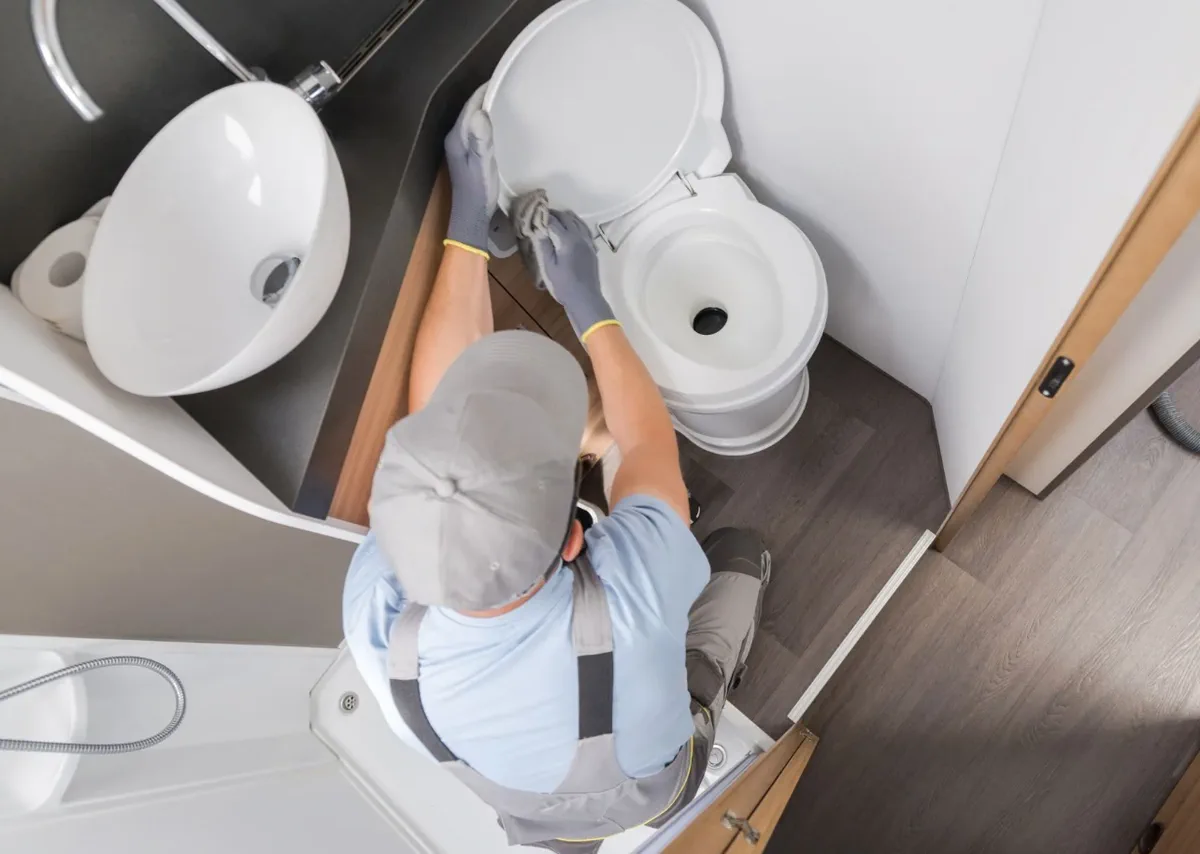
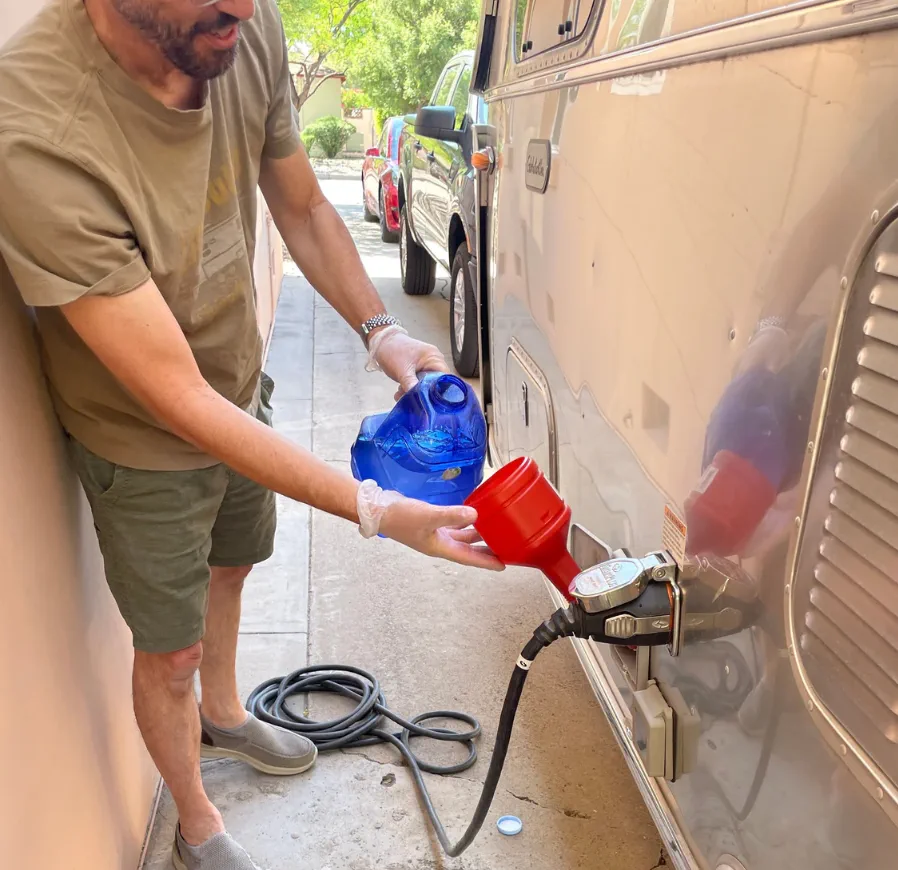
For most owners we recommend antifreeze pump-through using Splash or Camco RV-grade pink antifreeze. Running it through every line, fitting, valve seat, and P-trap leaves a coating that stays in place even if temperatures drop hard or the rig sits longer than planned - there is no residual water pocket to freeze and crack a fitting.
Blow-out with compressed air is faster and leaves the lines completely dry, which some owners prefer, but it has one real weakness: any low spot, kinked line, or poorly drained trap can hold water the air never reached. If that spot freezes, you are looking at a cracked fitting or split pipe in spring. Florida snowbirds storing through summer also benefit from antifreeze pump-through because dry P-traps wick out and let sewer gas and mold in - the antifreeze keeps those traps sealed through months of storage.
I'm in Idaho - when should winterization actually happen?
In the Treasure Valley - Boise, Meridian, Nampa, Caldwell, Eagle, Star - the first hard freeze typically lands late October through mid-November, so scheduling by mid-October gives you a reasonable buffer if the season runs early. At higher elevations, that window moves up to late September.
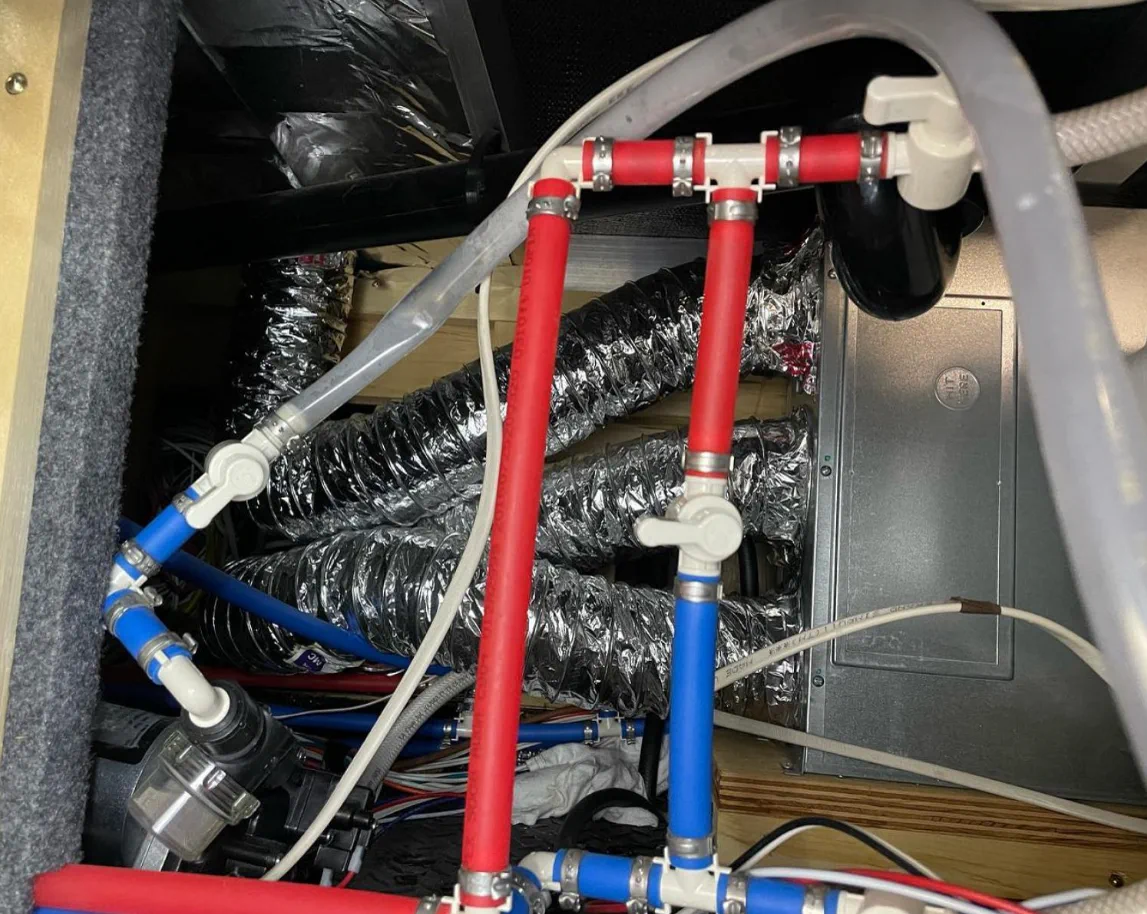
We monitor the 10-day forecast for our route and reach out to customers when a freeze warning is approaching, so you're not caught off guard. The reason the timing matters: a single hard freeze is enough to split PEX lines, crack the pump head, or fracture a water heater tank - repairs that run well past what winterization costs. When we arrive, we blow out the lines with compressed air, add non-toxic antifreeze to the traps and low points, bypass the water heater, and confirm the pump is depressurized before we leave.
Do I really need to winterize my RV in Florida?
If you're storing for the summer while you head north, yes - Florida's summer conditions are rough on a sitting rig in ways that aren't obvious until you open it up months later. Dry P-traps let sewer gas back into the cabin and invite insects; stagnant fresh tanks grow bacteria and biofilm that takes aggressive sanitizing to clear; and the humidity alone can push mold into upholstery, cabinets, and HVAC ducts within a few weeks.
Our storage prep package covers antifreeze in the trap seals, fresh tank flush and sanitize, battery disconnect, tire UV covers, mouse and palmetto bug exclusion at entry points, and a tie-down check with hurricane season in mind. If you skip it and come back to a mold problem or a dead battery bank, that repair bill runs well past what the prep costs.
What does battery disconnect plus tender install actually do?
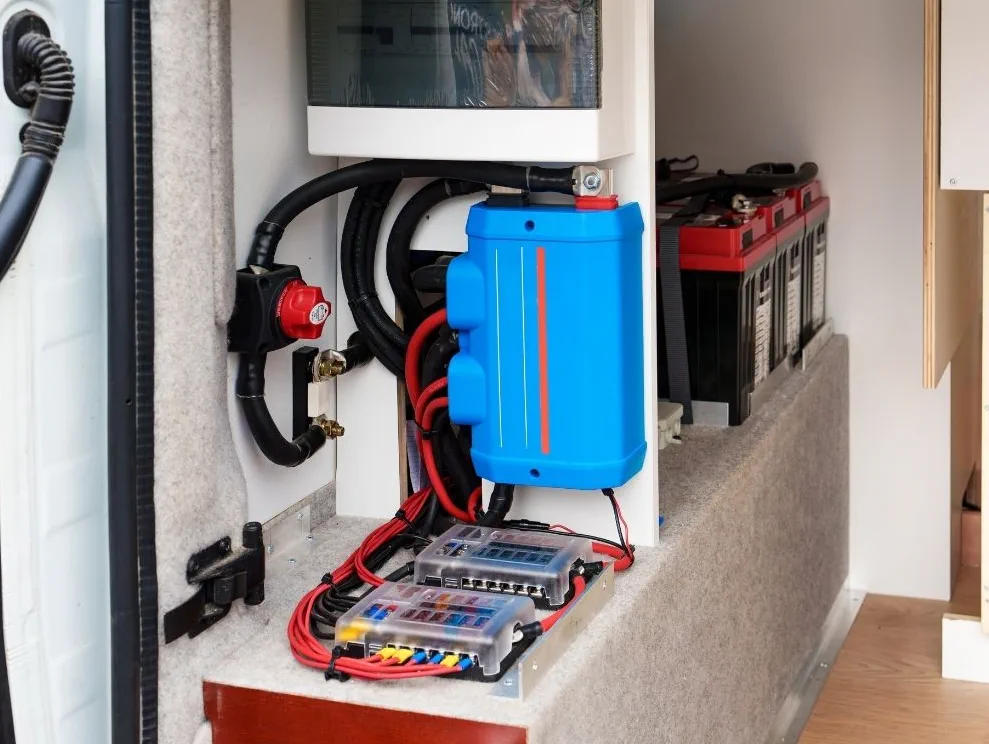
We physically disconnect the negative cable so parasitic loads - CO detectors, propane sensors, radio memory, and anything else drawing standby current - can't drain the bank over a long storage period. Even a 30-50 milliamp draw adds up over months and can take a lead-acid battery from full to dead and sulfated before spring.
Once the cable is off, we install a NOCO Genius 5 or 10 tender on a weatherproof pigtail so the battery stays in float charge without overcharging. Lead-acid batteries left fully disconnected and untended for six months will self-discharge enough to sulfate the plates, which cuts capacity permanently and often means a replacement you wouldn't have needed. Lithium banks like Battle Born require a different approach - most have a low-voltage cutoff and prefer storage at a partial state of charge rather than a constant float, so we follow the manufacturer's storage spec for whatever chemistry you're running rather than applying a one-size approach.
How does de-winterization work in spring?
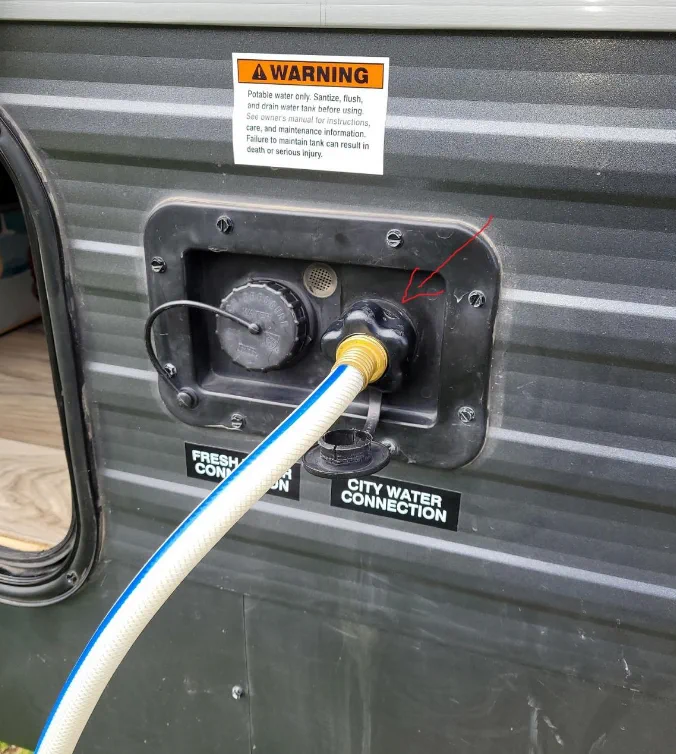
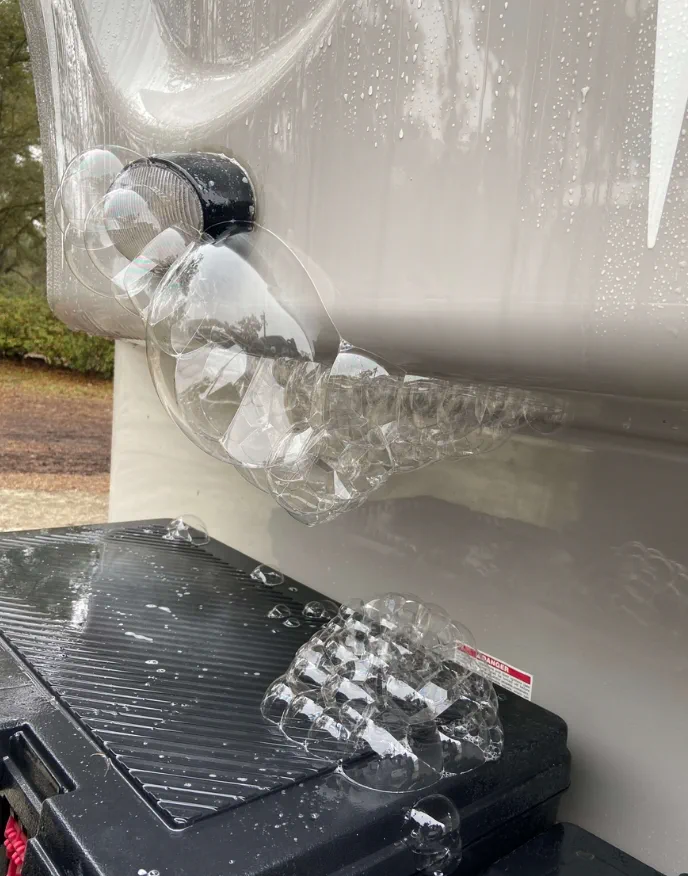
De-winterization starts with flushing all RV antifreeze out of the lines, then sanitizing the fresh water system with a measured bleach solution mixed to RVIA spec - the ratio matters because too little won't kill bacteria that built up over winter and too much leaves a taste that lingers for weeks. We fill the tank, run every fixture in sequence (sinks, shower, toilet, outside shower if you have one) until water runs clear, then let the solution dwell in the lines and tank.
That dwell time is why we typically drop in to prep, leave you for a few hours, and return same-afternoon. On the return visit we drain, refill with fresh water, run every fixture again until the bleach smell is gone, and pressure-test the system to 60 PSI to catch any fittings that cracked over a hard freeze.
We also verify the water heater fires and holds temp - freeze damage to the element or burner assembly sometimes only shows up once the unit is fully refilled. The job runs $185 flat.
Why does mouse-proofing cost extra and what does it include?
The $85 flat rate covers a full perimeter walk-around where we get eyes on every wire and pipe penetration entering the rig from underneath and through the sidewalls, then pack each one with steel wool - mice can't chew through it the way they work through foam or caulk. We follow that with Camco mouse-blocker pads or Bounce dryer sheets placed in cabinets, under sofas, and inside basement bays, which deter nesting through the off-season.
The reason this matters: a single mouse that finds a warm wiring harness in October can cause $2,000 or more in chewed wire damage before spring. If we find an existing gap larger than a half-inch at a slide room seal or entry point during the walk-around, we'll flag it and discuss a more permanent repair before we close everything up.
What is the full pre-storage package and what does it cover?
The $385 flat-rate pre-storage package covers everything we run through on a single visit: full antifreeze winterization of all water lines and holding tanks, battery disconnect with a trickle tender installed so you come back to a charged bank, tire covers placed and jack stands set to take weight off the sidewalls, mouse-proofing at common entry points like plumbing penetrations and compartment gaps, awning lockdown, and a Star brite seal-and-shine pass on roof seams to catch anything that could let water in over a long sit. While we have the awning out, we do a full Carefree or Lippert inspection - checking the arms, end caps, and fabric for tears or stress cracks that would get worse under snow or wind load.
If we find a seam that needs more than a shine pass, we flag it before we leave so you can decide whether to address it now or schedule it in spring. One quote, one visit, no return trips needed.
Are you RVIA certified for winterization work?
Many of our techs hold RVIA and RVDA certifications, and the rest bring years of hands-on RV repair experience. For winterization, that distinction matters less than process discipline - we pull the manufacturer's procedure for your specific brand, whether that's Tiffin, Forest River, Jayco, Grand Design, Keystone, or Winnebago, and follow it step by step rather than working from memory.
Every job gets documented: which antifreeze concentration we used, which bypass valves we set, which lines we blew out, and the final pressure reading on the water system. That paperwork exists for a reason - if you file a warranty claim later for freeze damage, the manufacturer will ask whether winterization was done to spec, and our service record answers that question directly. If we spot a line that's already cracked or a valve that's seating poorly during the process, we flag it before we close up rather than after.
Can you come to my storage lot or do I need to bring the RV somewhere?
We come to you - no shop, no dropping the rig off, no waiting for a service bay to open up. Storage lots, driveways, RV parks, and campgrounds all work fine as long as we can get the truck alongside the rig.
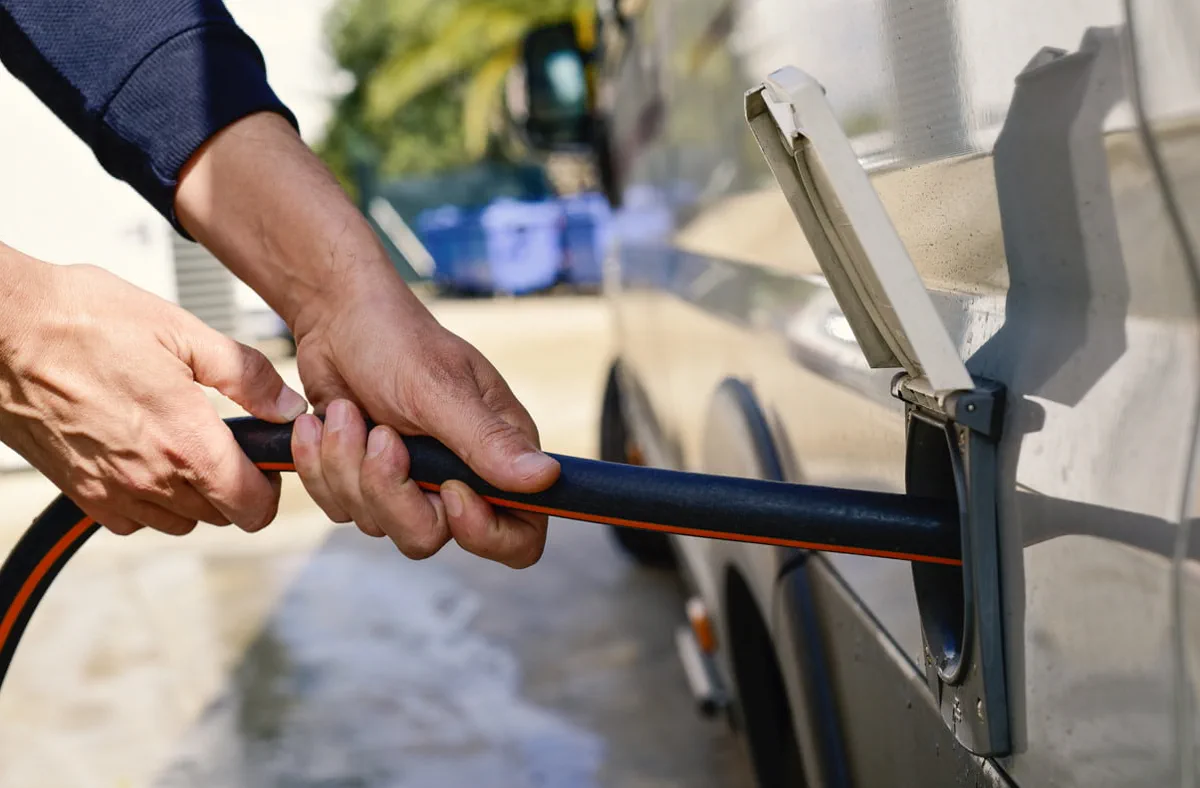
Winterization doesn't require shore power or a lift, so almost any location qualifies. Most jobs finish in about 90 minutes on-site: we blow out the lines with compressed air, add antifreeze to the traps and low points, bypass the water heater, and check valves and drain plugs before we leave. The one situation that slows things down is a rig that's already had a freeze event - if a fitting cracked or a valve seized, we treat that as a separate repair and call you before adding scope.