How do I know if my RV propane regulator is failing?
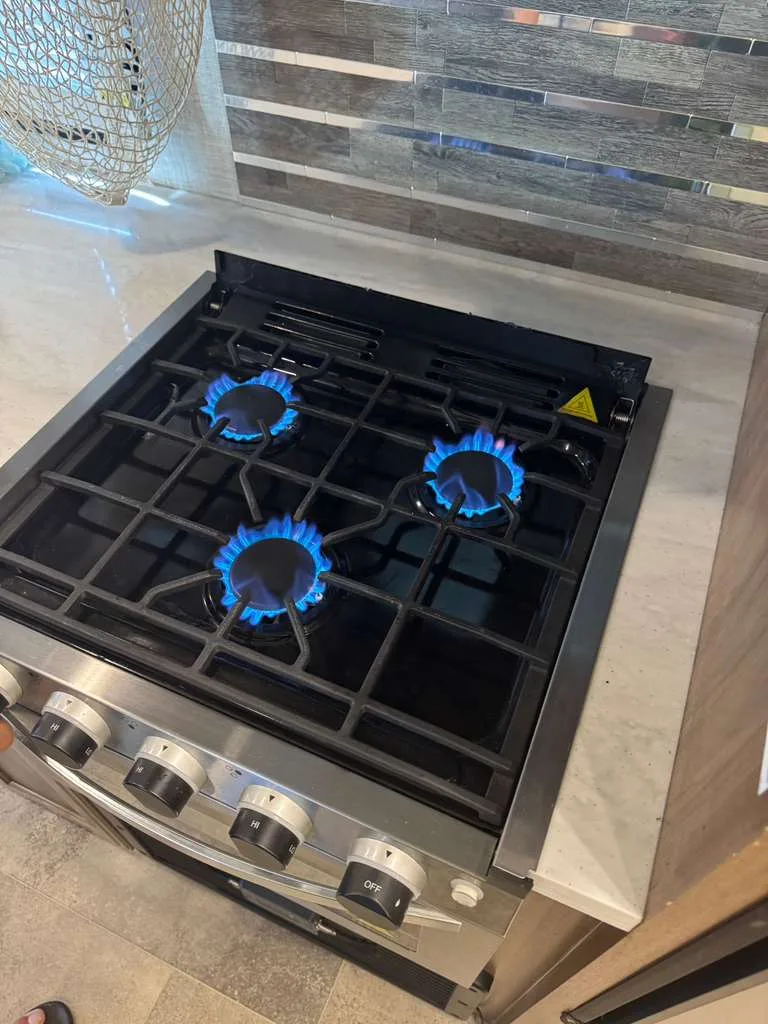
Yellow-tipped or lazy flames on the stove burners are usually the first sign - a healthy propane flame burns blue with minimal yellow. Furnace lockouts, inconsistent refrigerator performance on LP mode, and low burner output across multiple appliances all point to the regulator rather than an individual appliance.
A sulfur or rotten-egg smell at the regulator vent vent can mean the internal diaphragm is leaking, which is a safety issue you don't want to leave running. In Florida's humidity, the regulator spring and diaphragm typically corrode out in 5-7 years; Idaho's freeze-thaw cycles cause similar wear.
When we replace a regulator, we install Marshall Excelsior or Cavagna two-stage units, then verify outlet pressure at 11 inches water column with a manometer before calling the job done. If pressure tests normal but you still have symptoms, the problem is usually a partially clogged orifice or a failing appliance valve - both of which we check the same visit.
Is an electronic LP leak test the same as a manometer test?
No - these are two different tools that serve different purposes, and a complete LP inspection needs both. The electronic detector is a handheld sniffer we run along every fitting, valve, regulator connection, and appliance flex line to locate active leaks by sensing propane concentration in the air.
It tells us where to look, but it doesn't certify anything. The manometer test seals the system at the regulator, pressurizes it, and watches outlet pressure over a timed hold period - any drop means gas is escaping somewhere.
That timed-drop result is what satisfies NFPA 1192 certification requirements. We run the electronic pass first to find and repair leaks, then run the manometer to confirm the system holds before we certify it. Both tests together are $185 flat.
When does my RV propane tank need recertification?
DOT-marked cylinders need recertification 12 years from the manufacture date stamped on the collar, then every five years after that. The date is a month/year code - for example, "06 23" means June 2023, which gives you until June 2035 for that first interval.
Most propane refill stations and exchange services refuse any tank past its expiration date outright, so an expired cylinder can strand you without fuel even if the tank itself is in good shape. We do the recertification on-site: a full visual inspection of the collar, valve, and shell for corrosion or damage, followed by a drop test to verify valve integrity, then we stamp the new certification date so you can refill at any station.
The flat rate is $85 per tank. If the visual turns up a cracked collar weld or a valve that won't seat cleanly, we'll call you before proceeding - some tanks are better replaced than recertified.
What is an OPD valve and why does it matter?
OPD stands for Overfill Protection Device - a float-and-seat valve built into the service valve of any DOT propane cylinder manufactured after 1998, identifiable by the triangular handwheel. Its job is to stop the fill process automatically at roughly 80% capacity, leaving room for liquid propane to expand safely as temperatures rise.
When the float sticks or the seat wears, two things happen: refill stations will refuse to fill the tank because the safety stop can't be verified, and a worn seat can allow a slow leak that bleeds your supply down between uses. We replace the valve on-site, torque it to spec, and run a pressure test before we button everything up - so you leave with a tank that any station will accept.
Replacement runs $85-$165 per tank depending on cylinder size and valve brand. If we find corrosion at the collar or pitting on the tank body during the swap, we'll call you before going further, since a compromised cylinder needs retirement, not just a new valve.
Can you convert my furnace or stove from one fuel to another?
We re-orifice Atwood and Suburban furnaces and stove burners between propane and natural gas configurations using OEM jet kits - never aftermarket substitutes, because orifice diameter has to be exact for the appliance's rated BTU output. The process goes in order: confirm the incoming line pressure with a manometer, swap the orifices at each burner port, re-set the regulator outlet pressure to match the new fuel's delivery spec, then run a full manometer test at the appliance inlet before sign-off.
Most single-appliance conversions finish in 60-90 minutes on-site. If you have both a furnace and a stove to convert in the same visit, plan for closer to two hours. One thing to flag: if your regulator is sized for propane and you're moving to natural gas, the regulator itself may need replacement rather than just adjustment - we check that before we quote the job so there are no surprises.
Do I need a propane detector in my RV?
Yes, and this is not optional. NFPA 1192 and RVIA standards require a low-mounted LP detector in any RV with an LP system, and most campgrounds and RV parks will turn you away if yours is missing or visibly failed.
Propane sinks to floor level, which is why the sensor has to be mounted low - a detector placed near the ceiling won't catch a leak before it becomes dangerous. Most factory-installed units reach the end of reliable service life at the 5-7 year mark; the sensor element degrades and the unit may stop alarming even when gas is present.
We install Atwood, Camco, or Mr. Heater detectors hard-wired to 12V at floor level for $165 flat. If we find the existing wiring is corroded or the mounting location doesn't meet current placement standards, we'll call you before we reroute anything.
Why won't my furnace ignite at altitude or in cold weather?
LP vapor pressure drops sharply once temperatures fall below 20°F, and a standard single-stage regulator simply can't maintain enough flow to feed the furnace burner through ignition - the igniter fires, the flame sensor never sees a stable flame, and the board locks out after two or three attempts. At altitude, lower atmospheric pressure compounds the problem because the pressure differential the regulator relies on gets tighter.
We swap to a high-flow two-stage regulator with cold-weather diaphragms, then verify outlet pressure under demand with a manometer - you need 11 inches WC at the appliance with multiple burners running, not just at rest. We also clean the furnace orifice and sail switch while we have access, since both restrict flow independently and often go unserviced for years. If the regulator is mounted in an exposed compartment, we insulate the housing to keep the diaphragm pliable in sustained freezing temps.
Can you refill or fill tanks during a hurricane evacuation?
We don't refill tanks, but we can recertify expired DOT cylinders on-site so they'll be accepted at any refill station when you're ready to top off. That matters most before storm season, when refill stations get selective about cylinders they'll accept and an out-of-date requalification stamp gets you turned away at the worst possible time.
We also check OPD valves during the same visit - a valve that sticks open or won't seat properly is a safety issue at any time, but especially when you're traveling with full tanks in traffic. Florida law restricts cylinder transport during active evacuation orders, so the window to get this done is before hurricane season starts, not the day a storm is named. If we find a cylinder that's corroded beyond recertification, we'll tell you on-site so you can source a replacement while there's still time.
Are you certified to work on RV propane systems?
Many of our techs hold RVIA and RVDA certifications, and the rest bring years of hands-on RV repair experience. On the standards side, we follow NFPA 1192 and ANSI Z21 for all LP testing and appliance work - those codes govern everything from regulator sizing to burner orifice conversion.
Every propane job ends the same way: a manometer pressure-hold test at the regulator outlet, a leak-down check across every fitting and appliance connection, and written documentation of outlet pressure and leak status that you keep as a record. If the pressure-hold shows a drop, we don't sign off until we've traced and repaired the source - that could be a loose flare fitting, a cracked flex line, or a valve seat that's worn past its sealing point. That final paperwork also matters if you're at a campground or marina that requires proof of a propane inspection before hookup.
What's the difference between a single-stage and two-stage regulator?
A single-stage regulator does the full pressure drop in one step - from whatever the tank is holding (anywhere from 100 PSI when full down to 20-30 PSI when nearly empty) straight to the 11 inches of water column your appliances need. The problem is that outlet pressure shifts as tank pressure falls, which means your furnace flame shrinks and your water heater may cycle inconsistently on a cold morning when demand is highest.
A two-stage regulator splits the job: the first stage drops tank pressure to a stable 10 PSI intermediate, and the second stage brings that down to a steady 11 inches WC regardless of what the tank or the weather is doing. That consistency protects appliance controls and makes for cleaner combustion. Two-stage is the current industry standard, and it is what we install on every regulator replacement we do.